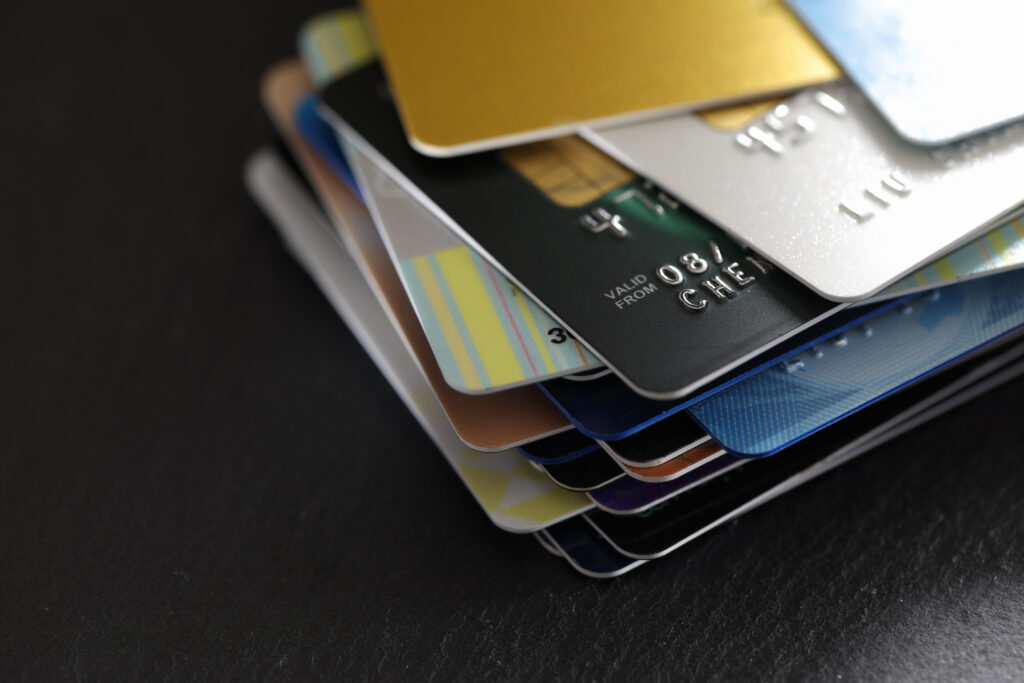
How often do you use a credit card? Perhaps you use more than one. In today’s economy, the small rectangle of plastic (or metal) in your wallet is more than just a tool for buying groceries; it’s a gateway to a complex financial ecosystem. To truly understand credit cards, we must look to the history and economics of American debt.
Drawing from the insights of Louis Hyman, Robert Manning, Thomas A. Durkin, and Sean Vanatta, here is the story of how we became a “Credit Card Nation.”
Where They Came From: The Shift from Main Street to Wall Street
Before the 20th century, personal debt was often viewed as a moral failing or the province of “loan sharks.” In “Debtor Nation,” Louis Hyman explains that credit was originally localized, meaning you had a “tab” at the neighborhood grocer.
The real transformation began after World War II. As Sean Vanatta details in his recent work “Plastic Money,” banks were looking for ways to bypass restrictive New Deal-era regulations that capped interest rates and limited where banks could operate. They landed on the credit card as a “bank in your pocket.”
Ambitious, to say the least.
The first major breakthrough was the Diners Club card in 1950, followed by BankAmericard (which became Visa) and Master Charge (later, Mastercard). As Hyman notes, the 1978 Marquette Supreme Court decision was a turning point, allowing banks to “export” the interest rates of their home state to the rest of the country. This led banks like Citibank to move their operations to states like South Dakota, effectively deregulating interest rates and turning consumer debt into a high-profit engine for Wall Street.
How They Work: The Mechanics of the “Swipe”
At its core, a credit card is a revolving loan. Unlike a car loan, which has a fixed end date, a credit card allows you to borrow, repay, and borrow again indefinitely.
You might see how this could quickly bury consumers in debt.
But even all the way back in 2001, Robert Manning observed a cultural shift where debt was no longer a personal embarrassment and instead viewed as a necessity and, extraordinarily, a source of personal identity.
In “Consumer Credit and the American Economy,” Thomas A. Durkin and his co-authors argue that this system is a masterpiece of efficiency. It reduces the “transaction costs” of life. Instead of 20 different stores checking your credit individually, one bank does it once, and you can use that trust anywhere.
The “Points” Game: Why Do Rewards Exist?
If you’re like me, you take advantage of credit card points whenever possible. Stacking points or airline miles feels like cash back incentives, and if you’ve ever wondered why a bank would give you 2% cash back or 50,000 airline miles just for spending money, the answer lies in a mix of psychology and “interchange fees.”
- Interchange Fees: Every time you swipe, the merchant pays a fee (usually 1.5% to 3%) to the bank. Banks use a portion of this fee to fund your rewards.
- The “Top of Wallet” Strategy: Banks want their card to be the one you reach for first because whatever you pay can be counted in their books. Not only that, but rewards create loyalty so they can count on your spending in their books.
- The “Reverse Robin Hood” Effect: Economic studies often suggest that consumers who carry balances and pay high interest effectively subsidize the rewards of consumers who pay in full. Robert Manning’s “Credit Card Nation” highlights how these incentives are designed to encourage more spending than a consumer might otherwise afford, leading to a cycle of revolving debt that fuels bank profits. Manning also argues that “access to credit and the terms of debt” a key feature in inequality today, referring to people who pay off their cards in full each month as “deadbeats” the banks can’t profit from.
How to Use Them Responsibly: Ideas for the Modern Consumer
Do you have what Manning calls an “addiction to credit?” While the authors above warn of the systemic risks, they also provide a roadmap for how to navigate this world without being consumed by it. Here’s how to use your credit card responsibly and avoid a debt pit.
- Treat it Like a Debit Card: The most responsible way to use a card is to avoid spending money you don’t already have in your bank account. As Durkin notes, credit is best used to “smooth consumption” (handling a large purchase you can afford but want to pay over a few weeks) rather than “expanding” it beyond your means.
- The “Pay-in-Full” Rule: To help maximize the points game, you must be a “transactor” (someone who pays the statement balance in full every month) rather than a “revolver.” The moment you pay interest, the value of your points is wiped out by the high APR.
- Beware the “Psychology of Plastic”: Manning points out that people tend to spend more when using plastic than when using cash because the “pain of paying” is delayed. If you find your spending creeping up, try a “debit-only” or “cash-only” week to recalibrate.
- Avoid “Credit Creep”: Just because a bank raises your limit doesn’t mean you should use it. Hyman’s history shows that the expansion of credit limits was often driven by bank profitability goals, not necessarily your financial health.
So, what’s the verdict? To paraphrase Robert Manning, is there power or peril in plastic? Everyone’s financial situation is unique, and we can help you take inventory of your funds and cost of living to help determine how to use financial tools to support your goals. A meeting with us can help you manage your financial situation, including your credit usage, and help you gain more clarity in your financial situation.
We are available to discuss your financial strategy at your convenience.
Sources:
Debtor Nation: The History of America in Red Ink by Louis Hyman
Credit Card Nation: The Consequences of America’s Addiction to Credit by Robert Manning
Consumer Credit and the American Economy by Thomas A. Durkin, et al
Plastic Money: The Rise of Credit Cards and the Banks That Created Them by Yale University Press
https://www.c-span.org/program/book-tv/credit-card-nation/106565
https://www.experian.com/blogs/ask-experian/the-history-of-credit-cards
https://supreme.justia.com/cases/federal/us/439/299
This information is provided as general information and is not intended to be specific financial guidance. The source(s) used to prepare this material is/are believed to be true, accurate and reliable, but is/are not guaranteed. SWG 5164829-0126